
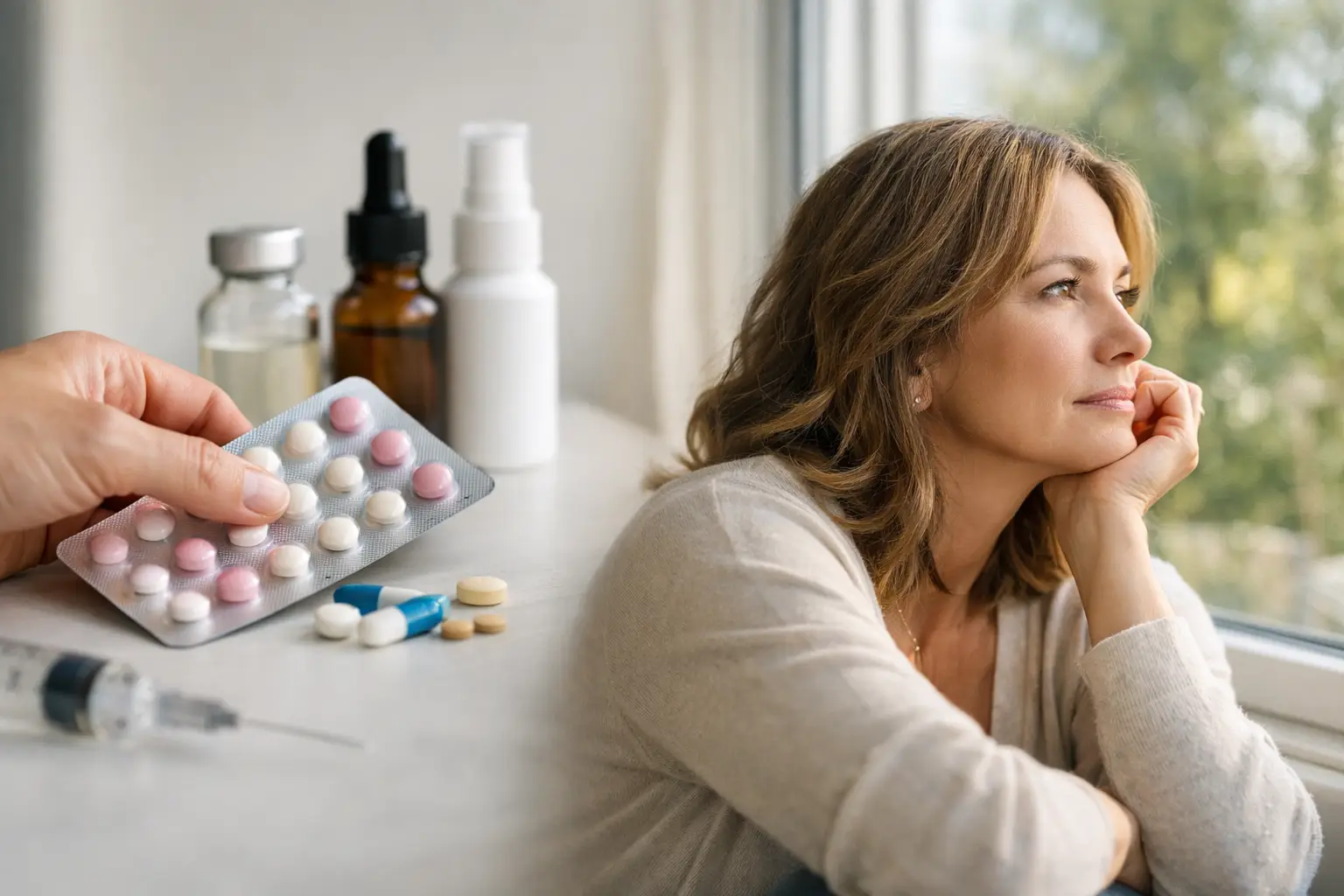
Starting hormone therapy can feel like finally moving toward yourself. It can also bring up feelings you did not expect: excitement beside fear, relief beside grief, confidence beside a new vulnerability. None of those responses means you are doing it wrong. Change, even deeply wanted change, asks your mind and body to adjust.
For many transgender and nonbinary people, hormone therapy is one meaningful part of living more fully in alignment with who they are. It is not the same experience for everyone, and there is no emotionally “correct” way to feel as changes begin. Affirming therapy can offer room for honest talk about the practical, relational, and emotional parts of the process - without asking you to defend your identity or explain the basics of your life.
Hormone Therapy Can Be an Emotional Transition, Too
People often focus on the visible or physical changes associated with hormone therapy. Those changes matter, but the internal experience deserves attention, too. You may feel more present in your body, more hopeful about the future, or less burdened by the effort of being seen in a way that does not fit. You may also notice old stress, sadness, anger, or anxiety becoming easier to access.
That does not mean hormones “cause” every emotion or that difficult feelings are a sign you should question your choices. Our emotional lives are shaped by far more than one factor. Past trauma, current stress, family dynamics, safety, finances, work, relationships, and the pressure of other people’s expectations can all be part of the picture.
Sometimes the hardest part is allowing yourself to want something. If you have spent years minimizing your needs, prioritizing others’ comfort, or trying not to take up space, moving toward self-recognition can bring up guilt. Therapy can help you make room for the guilt without allowing it to make your decisions for you.
The Relief and Grief Can Exist Together
A common misconception is that affirmation should feel joyful every moment. In reality, relief and grief can coexist. You may grieve time spent feeling disconnected from yourself. You may mourn relationships that changed, opportunities you did not have, or the version of you that learned to survive by staying small. You may feel tender toward that earlier self and angry about what they had to carry.
There is no need to turn that grief into a lesson before you are ready. A skilled therapist can help you stay with the feelings at a pace that feels manageable. Approaches such as mindfulness-based therapy can build skills for noticing emotions without becoming consumed by them. Cognitive behavioral therapy, or CBT, can help identify self-critical thoughts and test whether they are actually serving you.
If trauma is part of your story, present-day changes may stir up memories or body-based reactions that seem disconnected from what is happening now. EMDR trauma therapy may be helpful for some people who want support processing experiences that still feel emotionally immediate. The goal is not to erase your past. It is to reduce its power to dictate how safe, worthy, or free you are allowed to feel now.
Relationships May Need New Conversations
Hormone therapy can change how you experience your body, sexuality, confidence, energy, and boundaries. That can affect relationships of every kind: partners, friends, family, chosen family, and workplace connections. Some people feel closer to those who have supported them. Others discover that certain relationships have depended on them being less visible or less honest.
In couples counseling, the question is not whether one person’s identity or transition is a problem to solve. The focus is on how people can communicate clearly, make space for each person’s feelings, and build a relationship grounded in consent and mutual respect. A partner may have feelings that need care, but those feelings do not get to become a veto over your autonomy.
For people in ethical non-monogamous or polyamorous relationships, these conversations can have additional layers. Shifts in attraction, presentation, sexual connection, disclosure, or dating can bring up jealousy and uncertainty. An affirming, kink-aware therapist understands that relationship structure is not the issue. Therapy can help you name agreements, negotiate boundaries, and distinguish a difficult feeling from a harmful behavior.
Honest talk = real results. That may mean saying, “I need reassurance,” “I am still figuring out what feels good,” “I do not want to discuss my body today,” or “I need us to revisit our agreement.” These are not failures of communication. They are the building blocks of it.
When Loved Ones Have a Lot of Opinions
Even supportive people can ask intrusive questions, make assumptions, or expect access to your process that you do not want to give. You are allowed to decide what information is private. You are allowed to change the subject, set a limit, or take distance from a conversation that is leaving you depleted.
Therapy can be a place to practice those boundaries before using them in real life. Role-playing a conversation, preparing short responses, and identifying your nonnegotiables can make an intimidating interaction feel more possible. Boundaries are not about making everyone agree with you. They are about clarifying what you will participate in and what you need to remain emotionally safe.
Your Body Does Not Owe Anyone a Timeline
Hormone therapy is not a race toward a specific appearance, feeling, or social milestone. Comparing your experience to other people’s timelines can fuel anxiety, especially when online stories make change seem fast, predictable, or universally affirming. Your process is allowed to be individual.
It can help to ask gentler questions. Rather than “Why am I not happier yet?” try “What am I noticing?” Rather than “Do I look enough like myself?” try “When do I feel most at home in my life?” These questions do not demand a performance. They invite curiosity.
A therapist can also help you separate body image concerns from outside pressure. For some people, distress comes from being watched, evaluated, or expected to look a certain way. For others, it relates to longstanding perfectionism or painful experiences of being judged. The right support does not insist that you love every part of your body immediately. It helps you build a relationship with yourself that is more compassionate and less punishing.
What Affirming Therapy Can Offer During Hormone Therapy
Therapy is not about telling you whether hormone therapy is right for you. Decisions about your health and treatment belong in conversation with appropriately qualified medical professionals. Therapy can support the emotional work around those decisions and the life changes that may come with them.
That support might include making sense of anxiety before appointments, coping with uncertainty, processing old memories, navigating family stress, communicating with a partner, or building confidence in your voice and self-expression. It might mean identifying what helps you feel grounded on hard days: a friend who uses your name with ease, a comfortable outfit, a sensory routine, a support group, movement, rest, or time away from people who drain you.
At Inclusive Therapy Group, affirming virtual therapy is built around a simple belief: you should not have to leave essential parts of yourself outside the session. You can bring questions about gender, relationships, sexuality, trauma, identity, and belonging into the same conversation. You can be you, including when you are uncertain, overwhelmed, hopeful, or all three.
Give Yourself Permission to Take Up Space
Big change does not require you to have a polished narrative. You do not need to be endlessly grateful, perfectly confident, or ready to answer every question from others. You only need enough support to stay connected to yourself while you move through what is changing.
If hormone therapy is part of your path, let your emotional experience be real and specific. Celebrate what feels right. Ask for help with what feels hard. Keep choosing relationships and spaces where you do not have to shrink to be understood. That kind of support can make room for more than coping - it can make room for a life that feels like yours.