
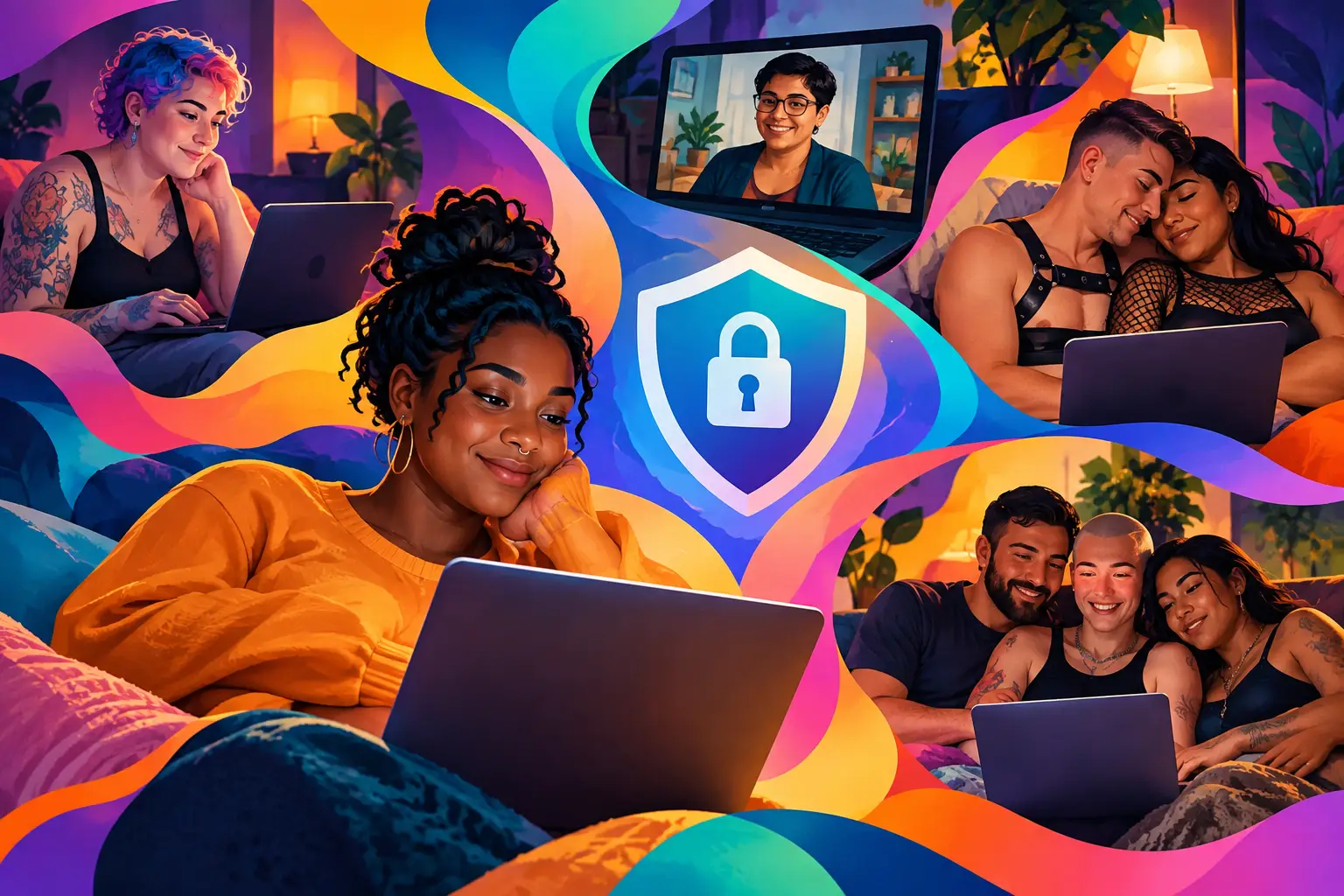
A telehealth therapy privacy guide should do more than tell you to use a password. Privacy in online counseling is also about whether you can speak openly, protect the parts of your identity you choose to share, and feel safe being seen as your full self. If you have ever had to minimize a relationship, gender identity, sexual practice, or family dynamic to avoid judgment, that sense of control matters.
Virtual therapy can make specialized, affirming support more accessible. It can also bring therapy into a home you share with partners, roommates, children, family members, or coworkers. A few practical choices before your first appointment can make a meaningful difference in how private and comfortable sessions feel.
What privacy in telehealth therapy actually means
Most people think first about the video platform. That matters: a therapy practice should use technology designed to protect client information and follow applicable privacy requirements. But a private session involves more than encrypted video.
Your environment, device, notifications, email access, payment statements, and the people who may overhear you all affect confidentiality. Privacy also includes emotional safety. You should not have to spend a session scanning the hallway, lowering your voice, or worrying that an affirming conversation will be misunderstood by someone nearby.
There is no one perfect setup. A person living alone may be most concerned about digital security, while someone sharing a small apartment may need a plan for sound and interruptions. The goal is not perfection. It is creating enough protected space that therapy can be honest and useful.
Start with the room, not the screen
A closed door helps, but it is not always enough. Before your appointment, consider what can be heard through walls, vents, doors, and headphones. White noise from a fan, a sound machine, or even a quiet audio track outside the room can help cover conversation. If you use headphones, choose a pair that does not leak sound at higher volumes.
For some clients, a parked car or a private outdoor area feels like the only available option. These can work occasionally, but they have trade-offs. Wi-Fi and cellular connections may be unstable, weather can interfere, and people may pass by unexpectedly. If a car is your best option, choose a safe, legal location, use headphones, and avoid driving during the session.
You can also use a neutral explanation for your appointment if that feels safer. “I have a meeting” is enough. You never owe roommates, family, partners, or employers details about your counseling. In relationships where privacy needs to be negotiated, it can help to discuss the appointment time in advance: who needs the room, when interruptions are okay, and what to do if someone needs you.
If you are in a relationship that includes multiple partners, privacy agreements may require extra thought. A partner may know you have therapy without being entitled to the details. Keeping that boundary is not secrecy or rejection. It is a healthy limit that gives you room to process your own feelings, choices, and relationship concerns.
Have a backup plan for interruptions
Tell your therapist early if privacy at home is unreliable. You can agree on a simple plan for what happens if someone enters the room or you suddenly cannot speak freely. You might switch to a neutral topic, type a brief message in the platform chat, or end and reschedule the session.
It is also useful to decide where you will go if your usual spot becomes unavailable. A backup plan reduces the pressure to push through a session when you do not feel safe enough to talk.
Protect the devices you use
Use a personal device when possible, rather than a shared computer, work laptop, or tablet that other people can access. Workplace devices may have monitoring software, restrictions, or activity logs outside your control. Shared devices can leave behind browser history, saved passwords, downloads, and notifications.
A strong device passcode and automatic screen lock are simple but effective protections. Keep your operating system, browser, and video app updated, since updates often address security issues. If your device offers separate user accounts, use one that only you can open.
Avoid recording sessions unless you and your therapist have clearly discussed it and agreed to it. Recording can change how safe a conversation feels, creates another sensitive file to protect, and may be restricted by state law or practice policy. The same caution applies to screenshots, even if you are tempted to save a helpful statement from a session.
Be thoughtful about smart speakers and voice assistants. If one is in the room, mute it or unplug it before your appointment. Close unrelated apps, especially ones that can display pop-up messages on screen. A notification containing a name, contact, or private text can be distracting and can expose information if someone else walks by.
Use secure connections without overcomplicating it
Private home Wi-Fi is generally preferable to public Wi-Fi at a coffee shop, hotel, airport, or shared workspace. If you must use a public connection, remember that a private room is still more important than a convenient signal. Do not log into a therapy portal on a computer that is openly available to others.
Your therapy practice should give you clear instructions for entering sessions and accessing forms or messages. Check the sender and use the practice’s expected communication channels rather than clicking unfamiliar messages that claim to be about your appointment. If a link looks unusual, contact the practice through the phone number or email you already have on file.
Privacy is not your responsibility alone. It is reasonable to ask a prospective therapist how video sessions work, how secure messages are handled, and what information may be shared through email or text. Clear answers are a sign that the practice takes confidentiality seriously.
Think ahead about communication and records
Email and text reminders are convenient, but they can appear on a lock screen, shared inbox, phone bill, or synced device. Review your notification settings before your first session. You may want to hide message previews, change the contact name displayed on your phone, or use a personal email address that only you can access.
When completing intake forms, give the practice a safe way to contact you. Let them know whether voicemail is private, whether messages should include the practice name, and whether another person can access your email or mail. These details are especially helpful when you are protecting information from a household member or navigating a complicated family situation.
Therapy records are confidential, but they are not invisible. Depending on your payment arrangement, insurance communications or account statements may show that you received counseling. If someone else is the policyholder or has access to financial accounts, ask about likely billing communications before you begin. A practice can explain its processes, though the exact details depend on your plan and circumstances.
You can also ask how the practice handles documentation, client portals, and requests for records. You deserve straightforward information about where your personal information lives and how you can access it.
Privacy supports more honest therapy
Sometimes a lack of privacy is not just logistical. It can shape what feels possible to say. You may hold back about trauma, panic, depression, gender exploration, jealousy, conflict, kink, or consensual non-monogamy because someone nearby could hear. You may worry that a shared partner will notice you seem upset after a session.
A skilled affirming therapist will not treat those concerns as a failure to engage. They can help you work with the conditions you actually have. That may mean using more structured approaches such as CBT or DBT skills when speaking freely is difficult, identifying safer times to meet, or setting boundaries that protect your right to private reflection.
At Inclusive Therapy Group, clients can bring the relationship structures, identities, and experiences that shape their lives into the room without first having to explain why they deserve respect. Privacy creates the room for that kind of honest talk. And honest talk creates the possibility for real results.
Questions worth asking before you book
You do not need technical expertise to make an informed choice. Ask how you will receive the session link, whether the platform is intended for confidential counseling, and how to update your communication preferences. Ask what happens if your connection drops or another person enters your space. If you are seeking couples counseling, ask how confidentiality works when partners attend from separate locations or communicate with the therapist outside the session.
It is also appropriate to ask about your therapist’s approach to the concerns you want to discuss. A privacy plan is more useful when you know you will not have to edit your life to fit someone else’s assumptions.
You can be you in therapy, even when your home setup is imperfect. Start with one change that gives you more control - headphones, hidden notifications, a closed door, or a clear interruption plan - and let that protected space grow from there.