
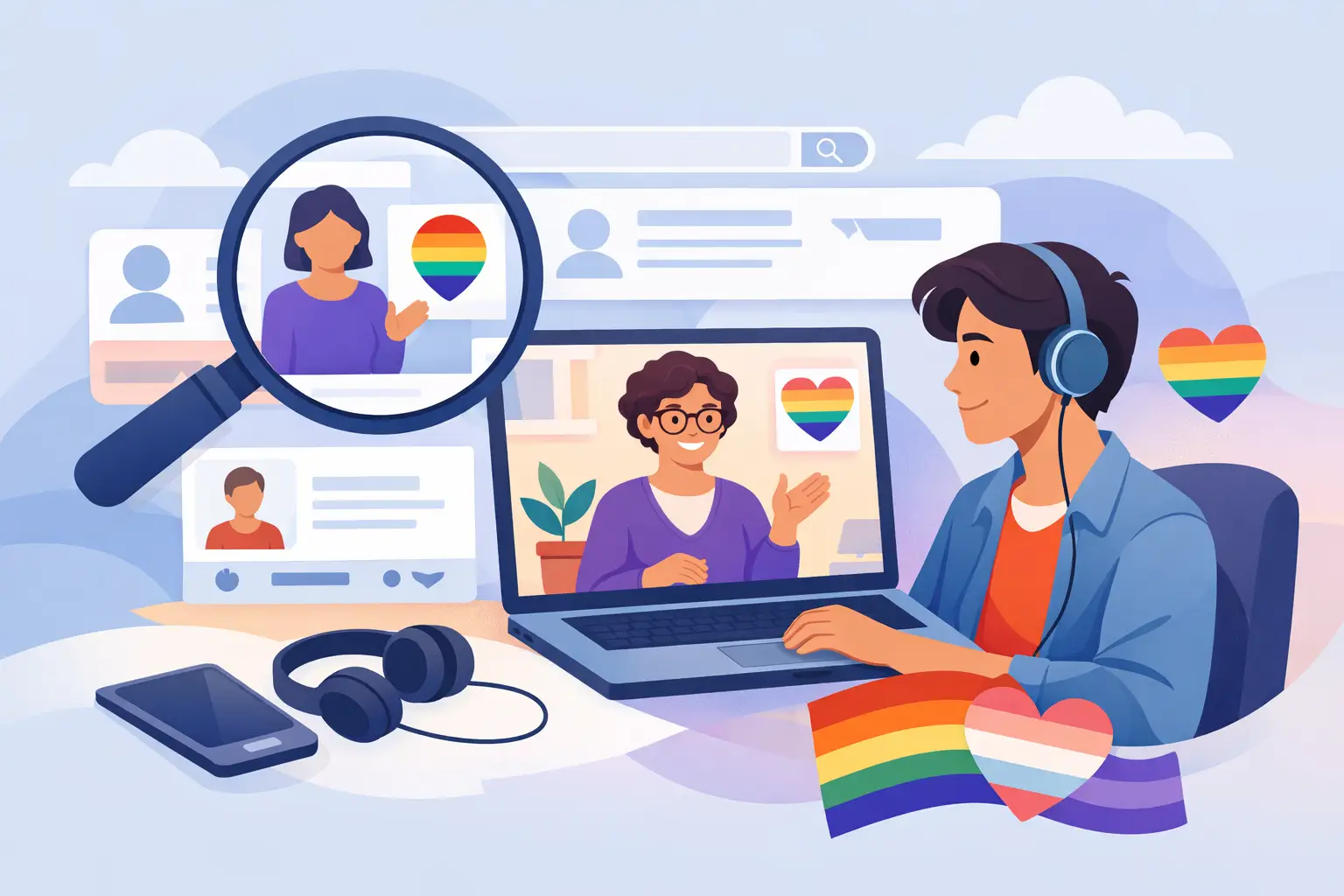
You should not have to spend the first several therapy sessions explaining basic language, defending your relationship structure, or editing your story to make a provider comfortable. An LGBTQ affirming therapist online creates room for the parts of your life that matter most, so therapy can focus on what brought you there: anxiety, trauma, burnout, conflict, identity questions, grief, or the desire to feel more at home in yourself.
Online therapy can make specialized care more reachable, especially when local options are limited or privacy and scheduling matter. But a provider calling themselves “inclusive” is not always the same as a provider who has the training, experience, and clinical approach to support you well. Finding the right fit takes a little more than checking a box on a directory.
What an LGBTQ affirming therapist online should offer
Affirming care is not a single modality or a warm first impression. It is an ongoing clinical practice: using the language that fits you, recognizing that sexuality, gender, culture, disability, religion, family, and relationship structure can all shape mental health, and treating your identity as a meaningful part of your life rather than a problem to solve.
A skilled affirming therapist understands that distress does not happen in a vacuum. You may be carrying the ordinary pressures of work, caregiving, dating, or a major transition alongside the exhausting impact of being misunderstood in healthcare, family systems, or past relationships. You may also be doing well in many areas of life and still want a confidential place to work through a specific fear, pattern, or decision. Both are valid reasons to seek support.
For LGBTQIA+ clients, competent therapy also means not making assumptions. A therapist should not presume your partner’s gender, your relationship agreements, your goals around transition or expression, or what community means to you. If you are kinky, ethically non-monogamous, consensually non-monogamous, or polyamorous, your therapist should be able to discuss consent, jealousy, boundaries, attachment, and communication without treating your relationship model as the cause of every concern.
That does not mean a therapist must share every aspect of your identity to be effective. What matters is demonstrated cultural humility, specialized knowledge, and a willingness to listen without asking you to educate them about the basics.
Look for care that is both affirming and clinically useful
Feeling seen is foundational, but it is not the whole treatment plan. The most helpful therapy connects emotional safety with practical, evidence-based support tailored to your goals.
If panic, social anxiety, depression, or persistent worry is taking up too much space, cognitive behavioral therapy (CBT) can help you identify patterns, test new responses, and build skills that work outside the session. If trauma is affecting your sleep, relationships, body, or sense of safety, EMDR trauma therapy may be worth discussing with a trained clinician. Mindfulness-based approaches can help you notice what is happening without immediately judging or reacting to it.
For people dealing with intense emotions, relationship ruptures, impulsive behavior, or chronic overwhelm, DBT skills can offer concrete ways to tolerate distress, regulate emotions, communicate needs, and protect self-respect. The best approach depends on your history, current symptoms, preferences, and the kind of support you want. A good therapist can explain why they are recommending an approach and adjust the work when it is not meeting your needs.
Couples therapy deserves the same level of care. An affirming couples therapist does not use a one-size-fits-all idea of partnership. They can help partners talk honestly about conflict, sexual connection, agreements, repair, family boundaries, and change. In non-monogamous relationships, that might include working through jealousy without assuming jealousy means the relationship is broken. In queer relationships, it might mean making room for the pressures each partner brings from outside the relationship while still addressing what happens between the two of you.
Questions to ask before you book
A consultation or first appointment is an opportunity to evaluate fit, not a commitment to keep going forever. You can ask direct questions, and a qualified provider should be able to answer clearly.
Consider asking how they work with LGBTQIA+ clients, what experience or training they have with concerns similar to yours, and whether they have worked with your relationship structure. If you are seeking trauma treatment, ask whether they offer EMDR or another trauma-focused approach. If you want support for panic, emotional regulation, or relationship communication, ask what therapy methods they commonly use and what early progress might look like.
It can also help to ask practical questions upfront. Confirm that the clinician is licensed to provide telehealth in the state where you will be located during sessions, how insurance or out-of-pocket payment works, and whether their schedule fits your life. Virtual therapy is flexible, but privacy still matters. Think about where you can talk freely, whether you need evening appointments, and how you will handle interruptions from roommates, children, or partners.
Pay attention to how you feel during the conversation. You do not need instant emotional closeness, and therapy can feel vulnerable at first. Still, you should leave with a sense that the provider heard your question, respected your boundaries, and gave you a straightforward answer. Confusion, defensiveness, repeated assumptions, or pressure to disclose before you are ready are useful signals to take seriously.
Make online therapy work in real life
The screen does not make therapy less real. It does change the container, and small choices can help sessions feel more grounded. Use headphones if they increase privacy, choose a consistent location when possible, and give yourself a few minutes before and after the appointment rather than rushing straight into a meeting or errand.
You can also tell your therapist what helps you feel present online. Maybe you prefer cameras on, need permission to stand or move, want written notes after sessions, or find it easier to begin with a specific agenda. If a partner is joining for couples counseling, talk ahead of time about where each person will sit and how you will avoid continuing a difficult conversation without support after the call ends.
Online care may not fit every situation. Some people prefer the sensory experience of an office, need a higher level of support, or cannot reliably access a private space. An affirming provider can discuss those limits with you openly and help you consider what format is safest and most useful. Telehealth is a tool, not a test of how committed you are to therapy.
Your full life belongs in the room
You are allowed to bring the complicated parts. You can discuss dating, marriage, sex, faith, chosen family, estrangement, parenting, body image, career stress, gender exploration, and the ways your communities bring both joy and pressure. You do not have to present a simplified version of your life to receive skilled care.
Inclusive Therapy Group provides telehealth-based, identity-competent care for clients in states where its clinicians are licensed, including individual and couples counseling, CBT, EMDR, DBT skills support, and other services shaped around real-life goals. The point is not to force your experience into a generic therapy script. It is to create space for honest talk that leads to real results.
The right therapist will not have a perfect answer for every feeling on day one. They will offer something more valuable: a respectful relationship where you can be you, ask hard questions, build practical skills, and decide what healing looks like on your own terms.